What is the Techniques for the Recovery of Degraded Areas for Urban Horticulture project?
The Techniques for the Recovery of Degraded Areas for Urban Horticulture project is a university outreach initiative developed within the Urban Multidisciplinary Laboratory for Sustainable Agriculture (LUMAS), linked to the Federal Fluminense University (UFF).
The initiative aims to transform degraded urban areas into productive, educational, and environmentally restored spaces by integrating urban horticulture practices, soil recovery, agroecology, environmental education, and community participation.
LUMAS is located in an area of approximately 100 m², behind the Library of the School of Engineering at the Praia Vermelha Campus (UFF). It operates as a living laboratory, where teaching, research, and outreach are articulated in a practical and interdisciplinary manner.
A key differentiator: a permanent outreach course
One of the project’s main differentiators is its direct articulation with the course Implementation of Outreach Projects, regularly offered by UFF with a weekly workload of 3 hours, every academic semester.
Within this framework, students actively participate in:
- the continuous care and maintenance of the LUMAS garden;
- the planning and execution of environmental restoration actions;
- the production of educational and outreach materials;
- interactions with institutional partners, schools, and urban collectives.
This integration ensures continuity, hands-on training, and strong outreach engagement, consolidating LUMAS as a permanent space for learning, experimentation, and dialogue with society.
Objectives
The main objectives of the project are to:
- Recover degraded urban areas through agroecological practices;
- Implement and maintain sustainable urban horticulture systems;
- Promote hands-on training of students in university outreach activities;
- Integrate scientific, technical, and community-based knowledge;
- Strengthen environmental education and food security in urban contexts;
- Encourage social engagement and collective territorial construction.
Methodology
The project adopts an approach based on Project-Based Learning (PBL), Participatory Outreach, and Education for Sustainability, integrating field-based practical activities, collective planning, and public communication.
Activities include:
- participatory diagnosis of degraded areas (soil, drainage, waste);
- soil preparation, composting, and agroecological management;
- implementation and maintenance of productive garden beds;
- continuous monitoring through weekly checklists;
- workshops, collective workdays, and educational actions;
- production of digital materials and Open Educational Resources (OER).
LUMAS in action
During the pilot phase and the first year of implementation, the project promoted the progressive recovery of a previously degraded area, transforming it into a functional, organized, and productive space dedicated to urban horticulture and environmental education.
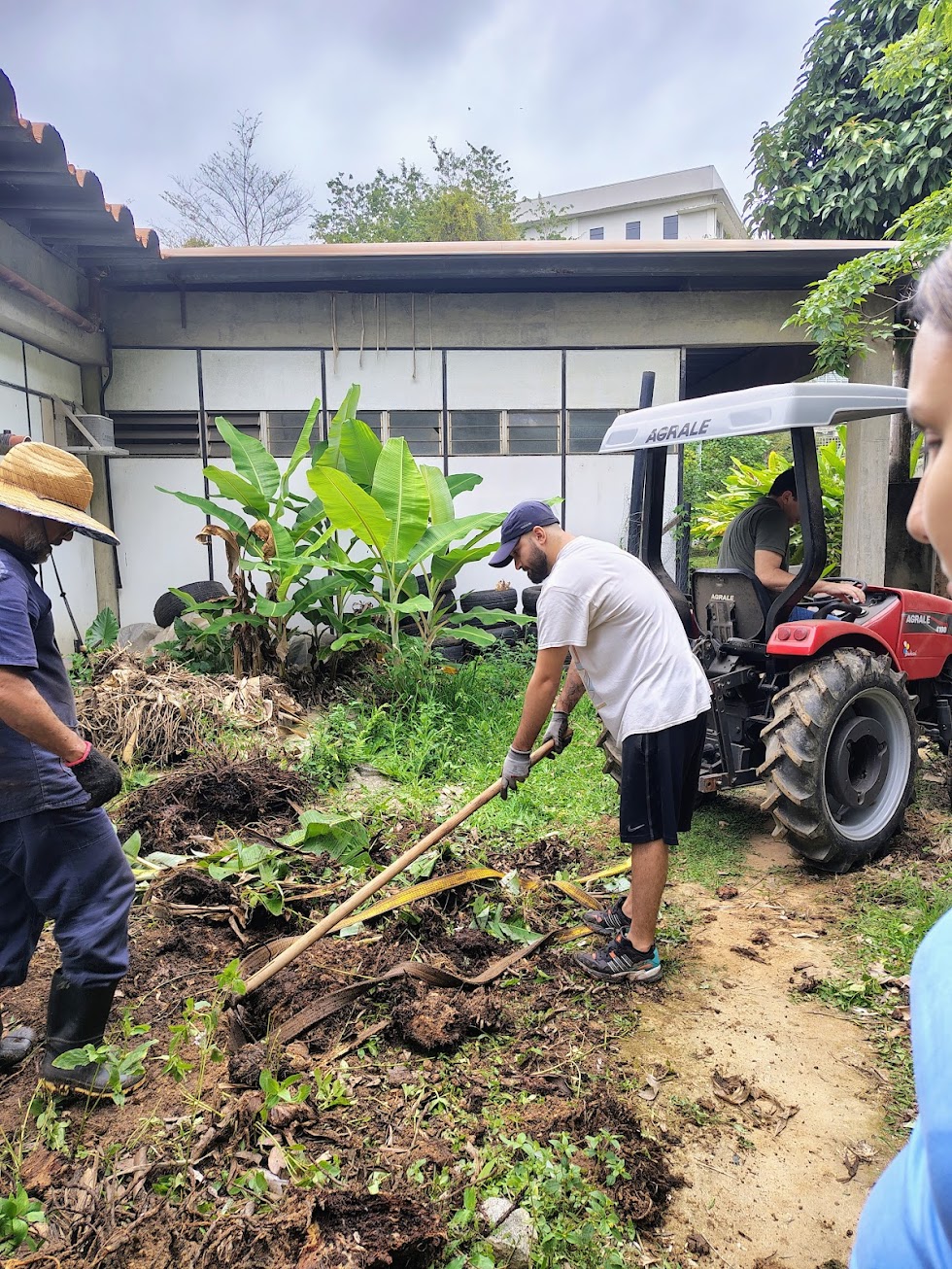
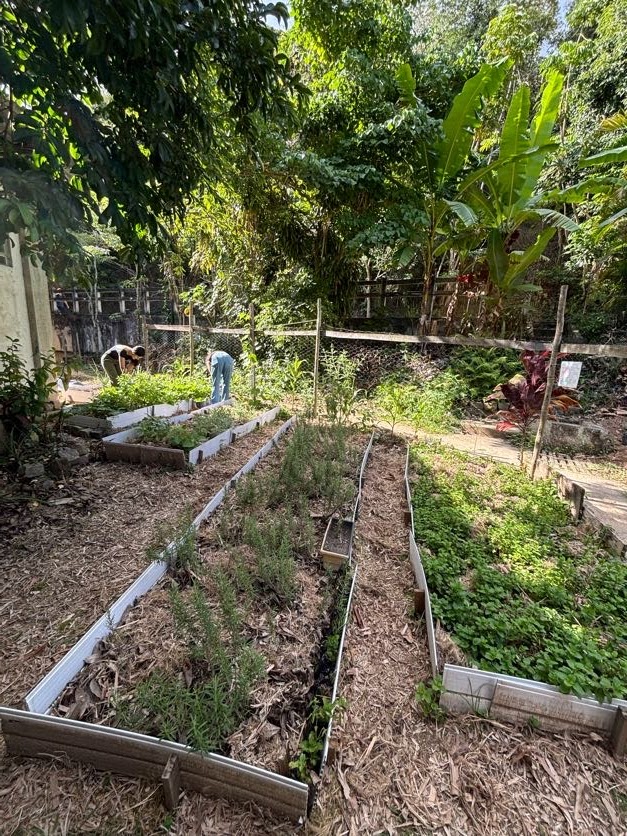
The maintenance of the space takes place on a weekly basis, articulated with outreach courses and the participation of volunteers, ensuring the continuity of activities throughout the year.
Expected outcomes
Throughout its duration (2025–2027), the project aims to:
- Consolidate LUMAS as a permanent urban laboratory for sustainable agriculture;
- Expand environmental restoration efforts and the productive diversity of the garden;
- Train students as outreach agents and knowledge multipliers;
- Expand partnerships with schools, urban collectives, and public institutions;
- Produce and disseminate Open Educational Resources on urban horticulture;
- Strengthen urban agriculture networks and regenerative practices.
These outcomes are conceived as continuous processes, assessed throughout the implementation of the project, in accordance with university outreach guidelines.
Institutional support
The Techniques for the Recovery of Degraded Areas for Urban Horticulture project is a university outreach initiative registered in SIAEX and receives institutional support from the Office of Outreach (Pro-Rectory of Extension) of the Federal Fluminense University (PROEX/UFF), reaffirming the commitment of the public university to social, environmental, and territorial transformation.
Would you like to follow the activities of LUMAS and this project more closely? Follow @agronautas_uff on Instagram.